 EN


How Ultrasonic Parking Sensors Work in Smart Parking Guidance Systems
As parking facilities become larger and more complex, helping drivers find available parking spaces quickly has become an important part of modern parking management.
Traditional parking facilities often require drivers to search for available spaces manually, resulting in unnecessary driving, traffic congestion, and a frustrating parking experience.
Ultrasonic parking sensors provide an effective solution by detecting parking space occupancy and displaying real-time availability through LED indicators.
In this article, we explore how ultrasonic parking sensors work, their key features, installation methods, and their role in smart parking guidance systems.
1. What Is an Ultrasonic Parking Sensor?
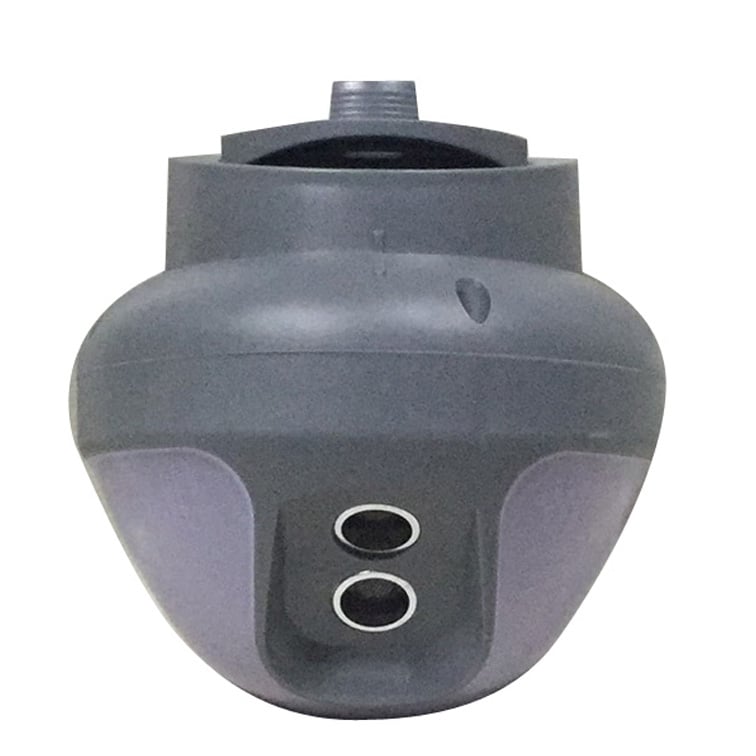
An ultrasonic parking sensor is an electronic detection device designed to monitor whether an individual parking space is occupied or vacant.
The sensor uses ultrasonic waves to measure the distance between the detector and objects beneath it, helping determine whether a vehicle is present.
In an indoor parking guidance system, ultrasonic sensors are typically installed above individual parking spaces or on overhead mounting structures.
Each sensor communicates parking occupancy information to the parking guidance control system.
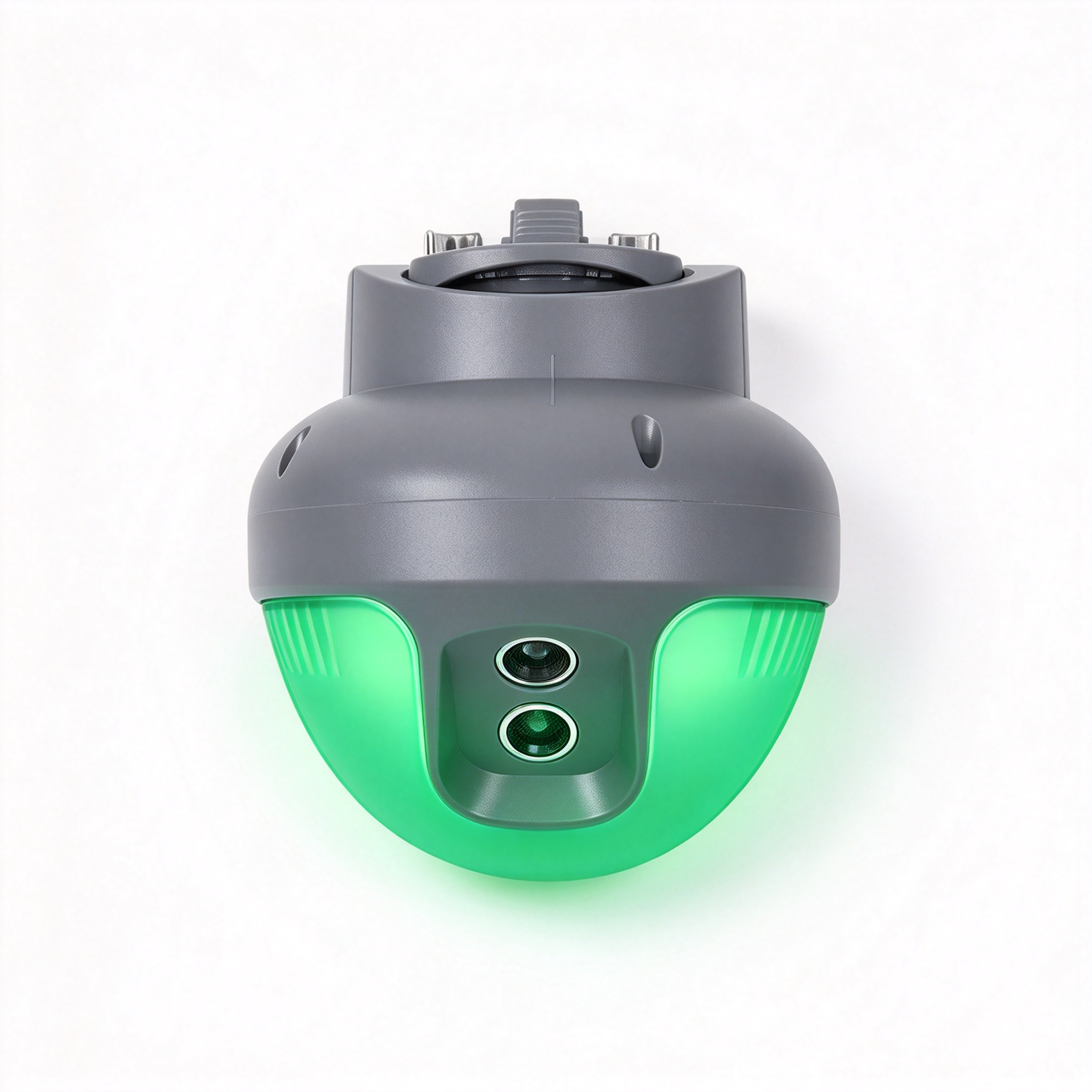
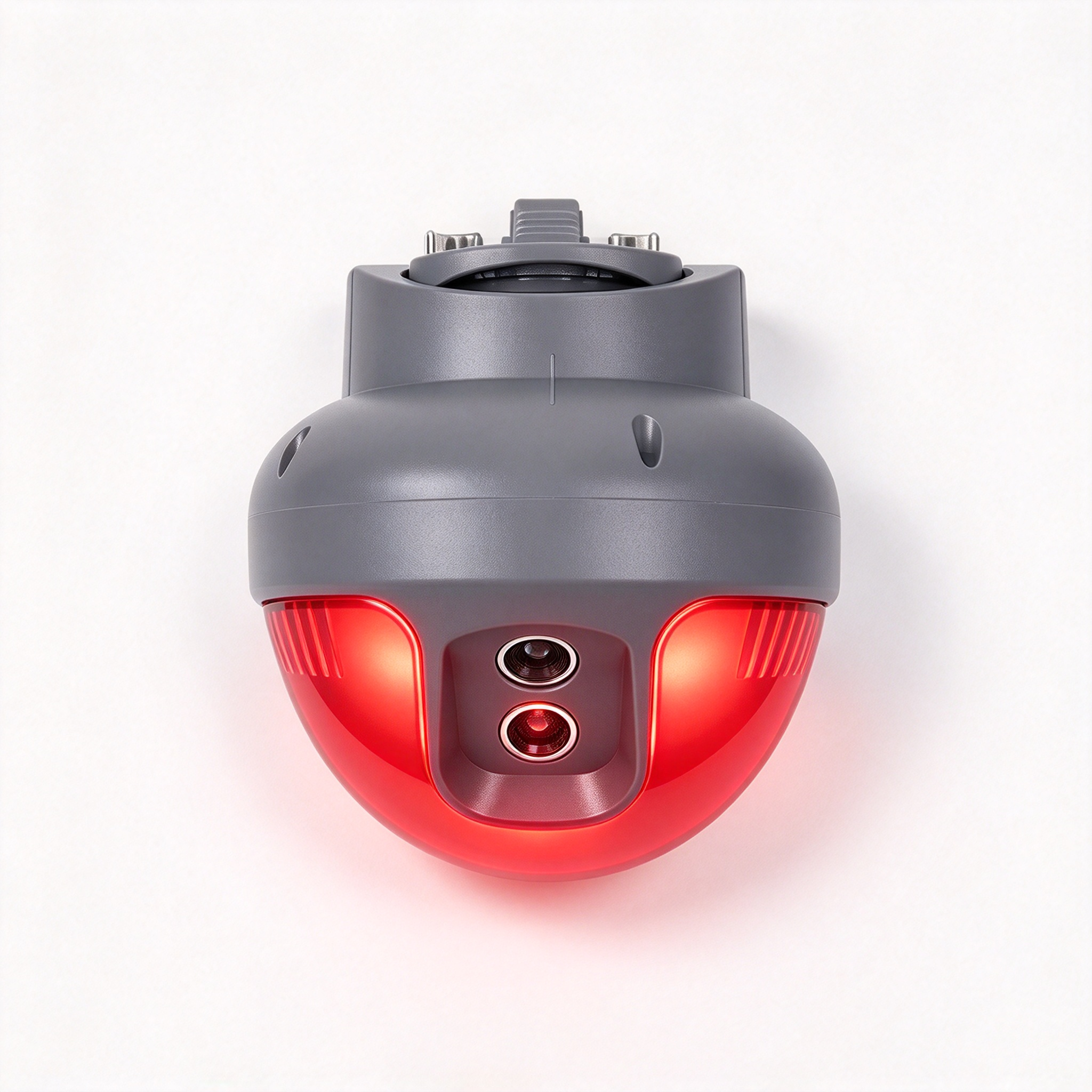
Some integrated ultrasonic parking detectors also feature built-in LED indicators that allow drivers to identify parking availability from a distance.
Common LED indicator colors include:
-
Green: Available parking space
-
Red: Occupied parking space
-
Blue: VIP or reserved parking space
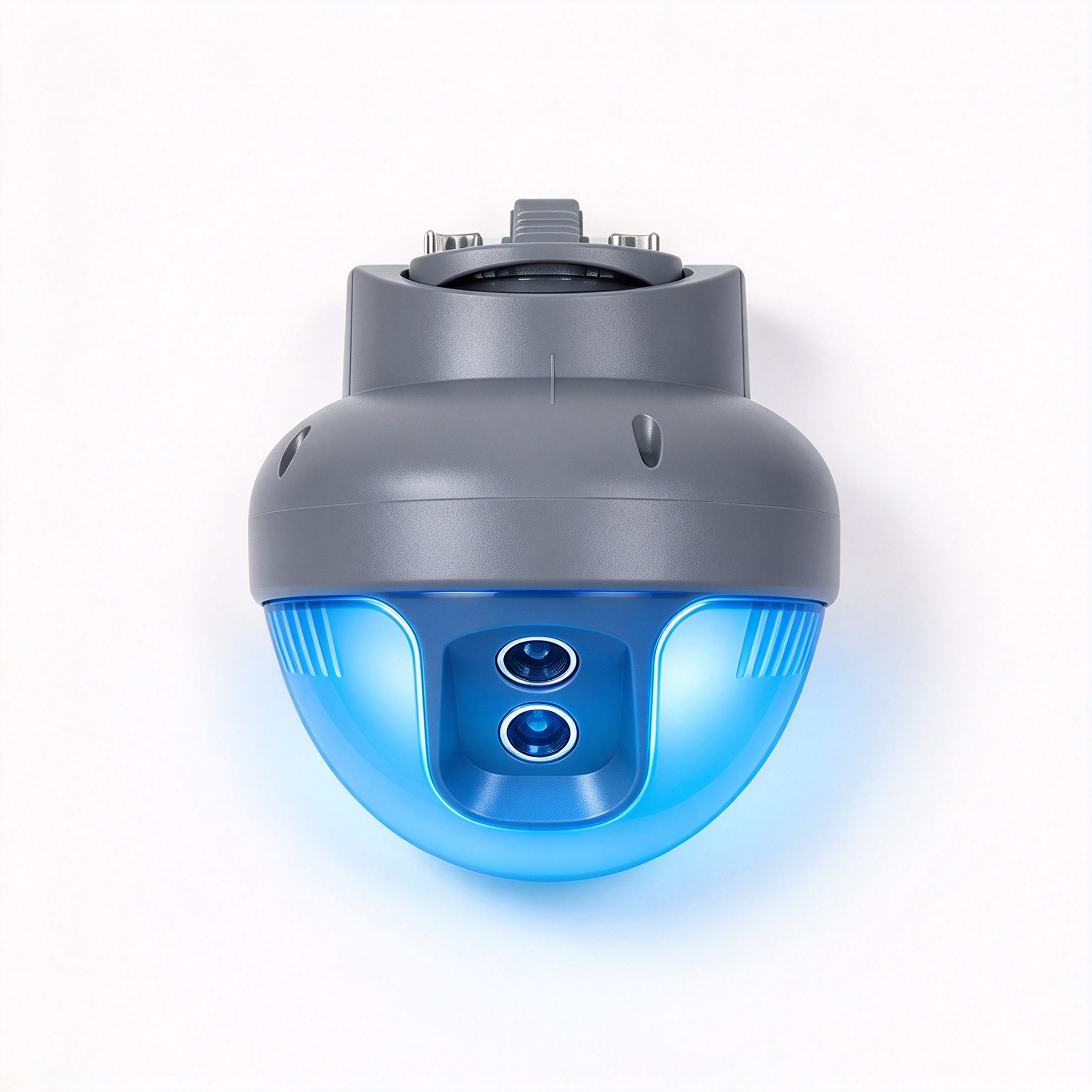
These visual indicators make parking guidance more intuitive and efficient.
2. How Does an Ultrasonic Parking Sensor Work?
Ultrasonic parking sensors operate by transmitting high-frequency sound waves and analyzing the reflected signals.
The detection process generally includes four steps.
Step 1: Ultrasonic Signal Transmission
The sensor emits ultrasonic waves toward the parking area beneath the installation position.
Step 2: Echo Reception
When the ultrasonic waves encounter a vehicle or another object, part of the signal is reflected back toward the sensor.
Step 3: Parking Occupancy Detection
The sensor analyzes the reflected signal and distance information to determine whether the parking space is occupied.
Step 4: Status Display and Data Transmission
Once the parking status is determined, the sensor updates its LED indicator and transmits occupancy information to the parking guidance system.
The system can then update indoor parking guidance signs, entrance displays, and parking management software.
This automated process helps parking operators monitor parking availability without requiring manual inspections.
3. Key Features of Integrated Ultrasonic Parking Sensors
Integrated Detection and LED Indication
An integrated ultrasonic parking sensor combines vehicle detection and parking status indication in a single device.
The built-in LED indicator allows drivers to identify parking space availability without checking a separate display.
Real-Time Parking Space Monitoring
The sensor continuously monitors the parking space and provides updated occupancy information to the management system.
Multiple Parking Status Indicators
Different LED colors can represent different parking space conditions, including available, occupied, and reserved spaces.
Centralized Parking Management
When connected to a compatible parking guidance system, ultrasonic sensors enable centralized monitoring of multiple parking spaces.
Suitable for Indoor Parking Facilities
Ultrasonic parking sensors are commonly used in indoor parking garages, commercial buildings, hospitals, hotels, and other multi-space parking facilities.
4. How Ultrasonic Sensors Integrate with Parking Guidance Systems
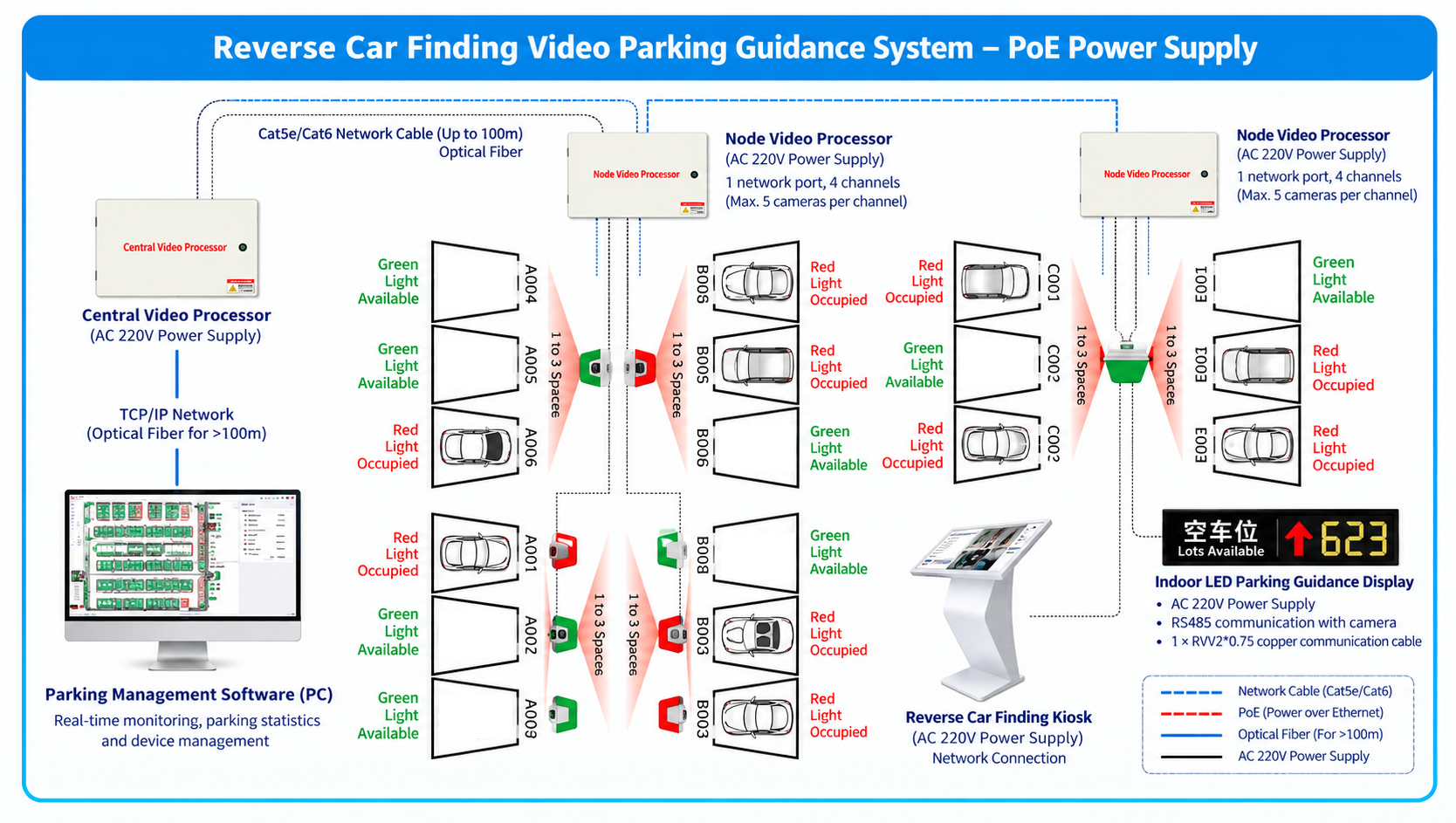
An ultrasonic parking guidance system typically consists of several interconnected components:
Ultrasonic Parking Sensors
Installed above parking spaces to detect vehicle occupancy.
Parking Guidance Sub-Controllers
Collect occupancy information from groups of parking sensors and communicate with the central management system.
Main Parking Controller
Coordinates communication between sub-controllers and parking management software.
Indoor Parking Guidance Displays
Show the number of available spaces and directional arrows to guide drivers toward vacant parking areas.
Parking Management Software
Provides centralized monitoring, parking occupancy visualization, and system management functions.
Together, these components form an integrated parking guidance solution that helps drivers locate available spaces more efficiently.
5. Installation of Ultrasonic Parking Sensors
Correct installation is essential for reliable parking occupancy detection.
Depending on the sensor model and parking facility layout, ultrasonic parking sensors can be installed on overhead mounting brackets or dedicated support structures.
Important installation considerations include:
-
Positioning the sensor according to the designated parking space layout
-
Maintaining the recommended installation height
-
Avoiding structural obstacles that may interfere with detection
-
Securing power and communication cables properly
-
Configuring the sensor communication network
-
Testing vehicle detection and LED status after installation
For bridge-mounted parking sensors, the mounting structure should be installed securely above the parking space according to the manufacturer's installation requirements.
Installation dimensions and wiring specifications should always follow the technical documentation of the selected sensor model.
6. Applications of Ultrasonic Parking Guidance Systems
Shopping Malls
Help customers identify available parking spaces quickly, especially during peak shopping hours.
Office Buildings
Improve parking space visibility and support efficient management of employee and visitor parking areas.
Hospitals
Help visitors and patients navigate parking facilities with less unnecessary driving.
Hotels
Provide clearer parking guidance and support designated guest or reserved parking areas.
Underground Parking Garages
Improve parking space visibility in large indoor environments where available spaces may be difficult to locate.
Commercial Parking Facilities
Support centralized occupancy monitoring and more efficient parking operations.
7. Benefits of Ultrasonic Parking Sensors
Installing ultrasonic parking sensors as part of a complete parking guidance system can offer several operational benefits.
Reduced Parking Search Time
Drivers can follow visual indicators and guidance displays instead of searching every parking aisle.
Improved Parking Experience
Clear parking availability information makes navigating a parking facility more convenient.
Better Parking Space Visibility
Parking operators can monitor occupancy across different parking zones through a centralized system.
Reduced Unnecessary Vehicle Movement
More efficient guidance can reduce unnecessary circulation within the parking facility.
Scalable System Architecture
Parking guidance systems can be designed to support different parking facility sizes and configurations.
8. How to Choose the Right Ultrasonic Parking Sensor
When selecting ultrasonic parking sensors for a parking guidance project, consider the following factors:
-
Detection accuracy and reliability
-
Supported installation height and mounting method
-
LED indicator visibility and available colors
-
Communication interface and system compatibility
-
Power supply requirements
-
Installation and maintenance convenience
-
Compatibility with parking guidance displays and management software
Choosing a sensor that matches the overall system architecture is important for long-term operation.
9. Complete Smart Parking Guidance Solutions
Ultrasonic parking sensors are only one component of a complete parking guidance system.
A comprehensive solution may include:
-
Integrated ultrasonic parking detectors
-
Video parking detection cameras
-
Indoor parking guidance displays
-
Entrance parking availability displays
-
Parking guidance controllers
-
Parking management software
-
Parking space search terminals
By combining parking detection, real-time monitoring, and visual guidance, parking operators can create a more organized and convenient parking environment.
Conclusion
Ultrasonic parking sensors play an important role in modern indoor parking guidance systems.
By combining automatic vehicle detection, LED status indication, and centralized parking management, these devices help improve parking space visibility and simplify the parking experience.
For parking facility operators, contractors, and system integrators, selecting the right ultrasonic parking sensor is an important step toward building an efficient smart parking guidance solution.
Looking for ultrasonic parking sensors or a complete parking guidance system for your project?
Contact our team to discuss product compatibility, installation requirements, system configuration, and parking guidance solutions tailored to your facility.
Table of Contents
- How Ultrasonic Parking Sensors Work in Smart Parking Guidance Systems
- 1. What Is an Ultrasonic Parking Sensor?
- 2. How Does an Ultrasonic Parking Sensor Work?
- 3. Key Features of Integrated Ultrasonic Parking Sensors
- 4. How Ultrasonic Sensors Integrate with Parking Guidance Systems
- 5. Installation of Ultrasonic Parking Sensors
- 6. Applications of Ultrasonic Parking Guidance Systems
- 7. Benefits of Ultrasonic Parking Sensors
- 8. How to Choose the Right Ultrasonic Parking Sensor
- 9. Complete Smart Parking Guidance Solutions
- Conclusion