 EN


Smart Parking Guidance System: How It Works, Benefits & Key Components
As urban populations grow and vehicle ownership increases, efficient parking management has become a major challenge for shopping malls, airports, hospitals, office buildings, and commercial parking facilities.
Drivers often spend unnecessary time searching for available parking spaces, leading to traffic congestion, increased fuel consumption, and a frustrating parking experience.
A Smart Parking Guidance System provides an intelligent solution by detecting parking space occupancy in real time and guiding drivers directly to available spaces.
In this article, we explain how a parking guidance system works, its key components, major benefits, and why video-based parking guidance technology is becoming an important part of modern parking infrastructure.
1. What Is a Smart Parking Guidance System?
A Smart Parking Guidance System (PGS) is an automated parking management solution designed to monitor parking space availability and guide vehicles to vacant parking spaces.
The system combines parking detection devices, communication networks, LED guidance displays, and centralized management software.
Instead of manually searching for parking spaces, drivers can follow real-time parking availability information displayed at parking entrances, intersections, and individual parking spaces.
A typical smart parking guidance system includes:
-
Video Parking Detection Cameras
-
LED Parking Guidance Displays
-
Parking Space Indicator Lights
-
Central and Node Video Processors
-
Parking Management Software
-
Reverse Car Finding Kiosks
-
Entrance Parking Availability Displays
These components work together to improve parking efficiency and simplify parking facility management.
2. How Does a Video Parking Guidance System Work?
A video-based parking guidance system uses intelligent cameras to identify whether individual parking spaces are occupied or available.
The system typically operates through five main steps.
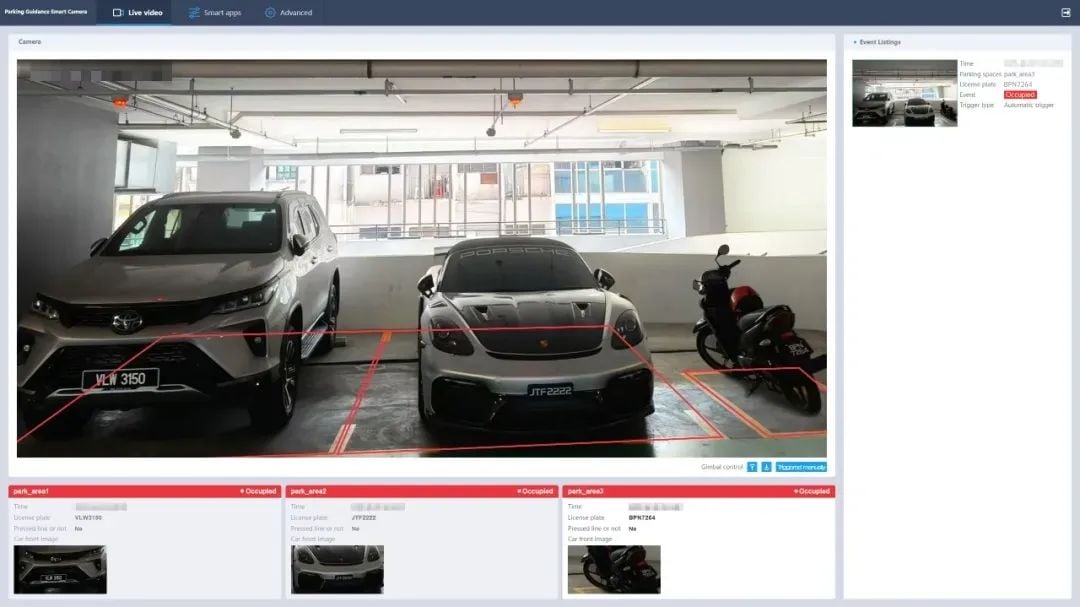
Step 1: Real-Time Parking Space Detection
Video parking detection cameras are installed above parking spaces to monitor vehicle occupancy.
Depending on the camera model and installation configuration, one camera can monitor multiple parking spaces.
The cameras analyze parking space conditions and determine whether each monitored space is occupied or vacant.
Step 2: Parking Status Indication
After identifying the parking space status, the system updates the corresponding indicator lights.
Typical parking status indicators include:
-
Green Light: Available parking space
-
Red Light: Occupied parking space
-
Other Configurable Colors: Reserved, VIP, or special-purpose parking spaces, depending on system configuration
Drivers can quickly identify available parking spaces without searching each parking row.
Step 3: Data Transmission and Processing
Parking occupancy information is transmitted through the communication network to the video processors and parking management platform.
Depending on the system architecture, the network may use Ethernet, PoE-supported connections, optical fiber, or other supported communication interfaces.
The management platform collects and processes parking occupancy information from different parking zones.
Step 4: LED Parking Guidance Display
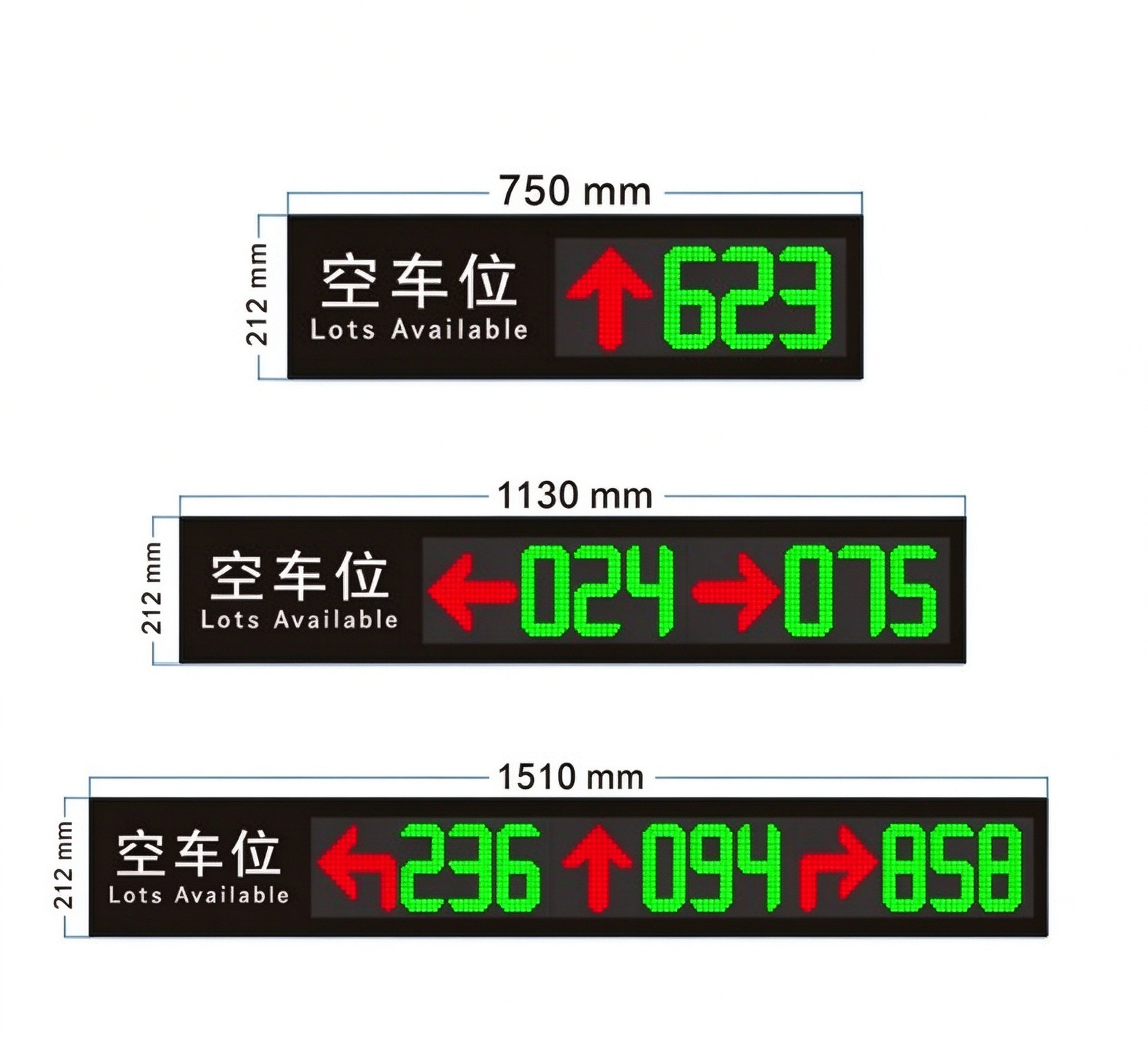
LED parking guidance displays show the number of available parking spaces in different parking areas.
For example:
-
Zone A: 125 Available Spaces
-
Zone B: 68 Available Spaces
-
Zone C: 32 Available Spaces
Directional arrows guide drivers toward areas with available parking.
This helps reduce unnecessary vehicle circulation inside parking facilities.
Step 5: Reverse Car Finding
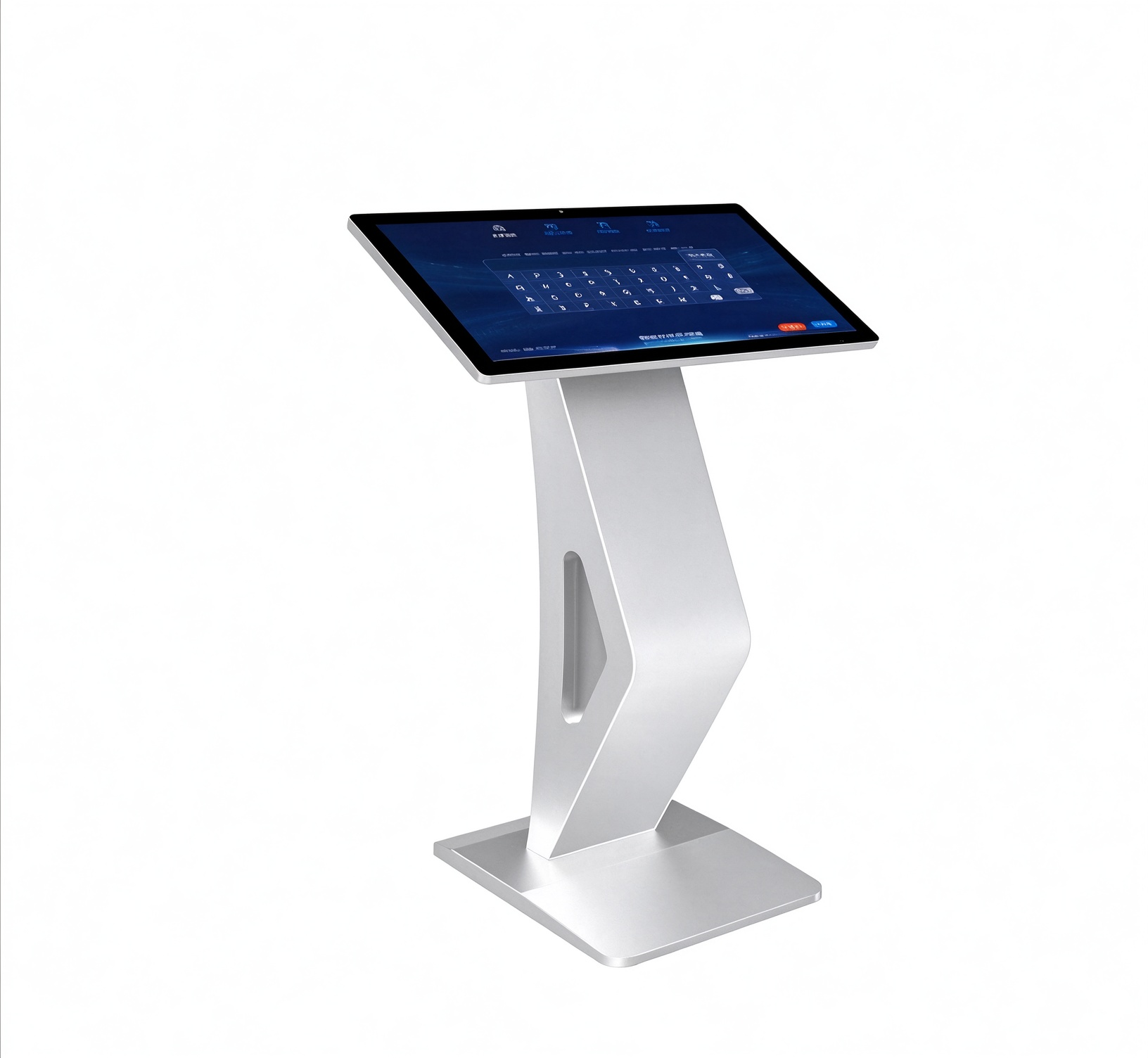
In supported video parking guidance configurations, the system can also provide a reverse car finding function.
Drivers can use a car finding kiosk to search for their parked vehicle using information such as the license plate number or parking space number.
The system can then display the vehicle location and a suggested walking route.
This feature is particularly useful in large shopping malls, airports, and multi-level underground parking facilities.
3. Key Components of a Smart Parking Guidance System
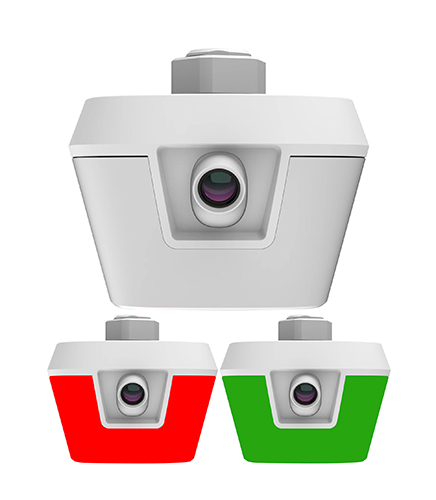
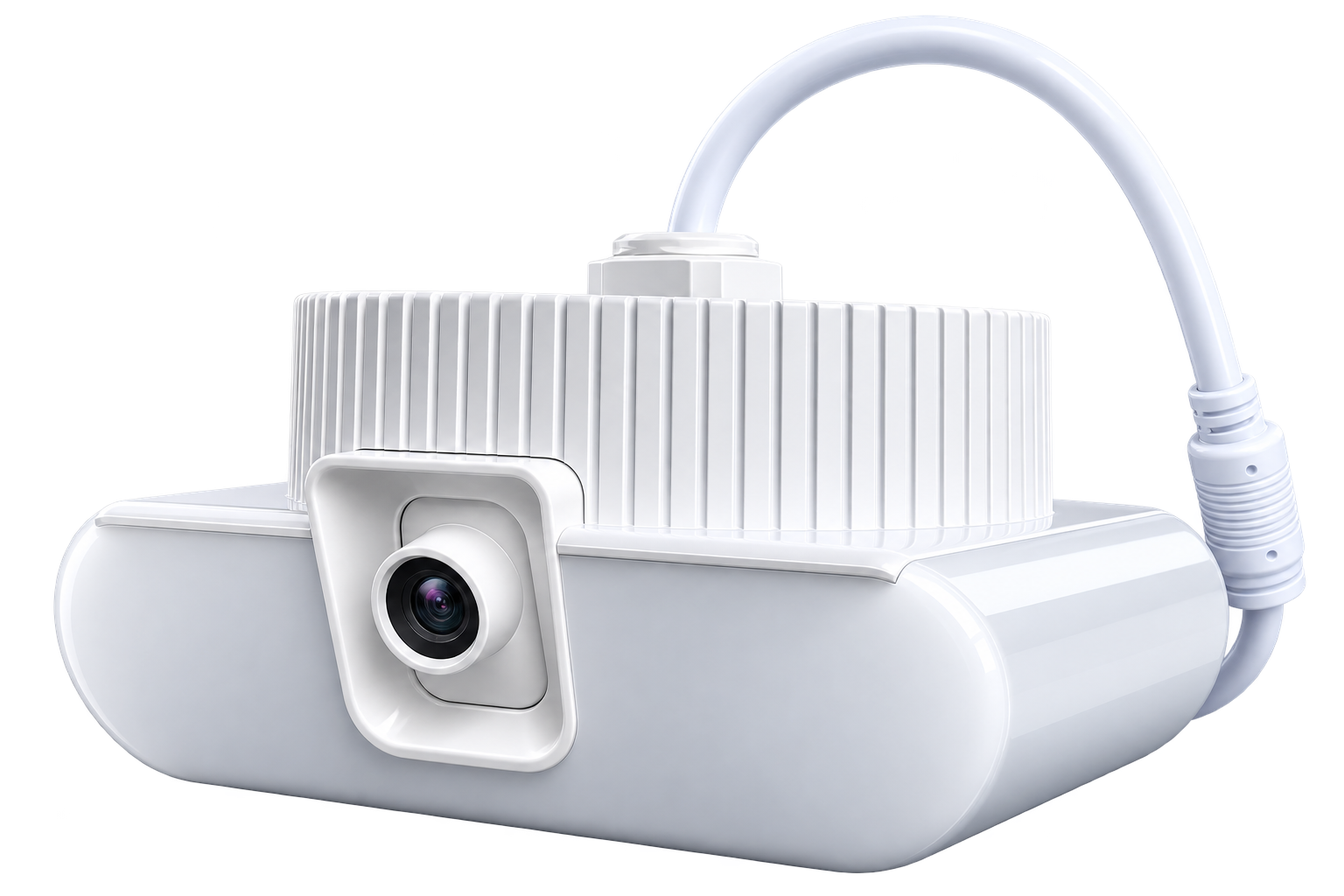
Video Parking Detection Camera
The video parking detection camera is one of the core components of a video-based parking guidance system.
It monitors parking spaces and provides occupancy information to the parking management platform.
Main functions:
-
Real-time parking space detection
-
Multi-space monitoring, depending on camera configuration
-
Integrated parking status indicators
-
Network communication
-
Support for vehicle recognition functions on compatible models
Video detection technology can reduce the need for individual ground-mounted sensors in suitable parking facility designs.
LED Parking Guidance Display
LED parking guidance displays are installed at parking garage intersections, entrances, and important driving routes.
They provide drivers with real-time information about available parking spaces.
Main functions:
-
Display available parking space counts
-
Show directional arrows
-
Support different parking zones
-
Provide high-visibility LED information
-
Help drivers locate available parking areas efficiently
Entrance Parking Availability Display
An entrance parking availability display shows the number of remaining parking spaces before vehicles enter the parking facility.
This allows drivers to make parking decisions earlier and can help reduce congestion at parking entrances.
Displays may be customized according to parking facility requirements, including size, color, and displayed information.
Parking Management Software
Parking management software provides centralized monitoring and management of parking space information.
Typical functions include:
-
Real-time parking occupancy monitoring
-
Parking space availability statistics
-
Parking zone management
-
Equipment status monitoring
-
Historical data reporting
-
Integration with compatible parking management equipment
The software helps parking operators understand parking utilization and improve operational efficiency.
Reverse Car Finding Kiosk
A reverse car finding kiosk helps drivers locate their parked vehicles.
It is especially valuable in large parking facilities where drivers may have difficulty remembering their parking locations.
Depending on the software and camera configuration, users can search by license plate number or other supported vehicle information.
The kiosk can display the vehicle location and navigation information to assist drivers.
4. Benefits of Installing a Smart Parking Guidance System
Reduce Parking Search Time
Drivers can identify available parking areas through LED displays and parking status indicators instead of searching every parking aisle.
This can reduce unnecessary driving inside the parking facility.
Improve Parking Space Utilization
Real-time occupancy monitoring gives parking operators better visibility into available and occupied spaces.
This information supports more effective parking space management.
Enhance the Driver Experience
Clear parking guidance information helps drivers navigate complex parking facilities more conveniently.
Reverse car finding functions can further improve the experience when returning to parked vehicles.
Support Centralized Parking Management
Parking operators can monitor multiple parking zones through a centralized management platform.
This reduces reliance on manual parking space inspections and improves operational visibility.
Support Smart Building Development
Parking guidance systems can form part of broader smart building and intelligent transportation solutions.
Depending on compatibility and project requirements, they may be integrated with access control, license plate recognition, and other parking management systems.
5. Where Can Smart Parking Guidance Systems Be Used?
Smart parking guidance systems are suitable for a wide range of commercial and public parking facilities.
Shopping Malls
Help customers locate parking spaces quickly and reduce congestion during peak shopping hours.
Airports
Support parking guidance across large parking zones and help travelers locate their vehicles when returning.
Hospitals
Improve parking accessibility for patients, visitors, and staff in busy hospital parking facilities.
Office Buildings
Provide organized parking guidance for employees, visitors, and authorized vehicles.
Underground Parking Garages
Offer real-time parking guidance in multi-level or complex indoor parking environments.
Commercial Parking Facilities
Help operators monitor parking space occupancy and improve the overall parking management process.
6. Video Parking Guidance vs. Ultrasonic Parking Guidance
Both video-based and ultrasonic parking guidance systems are used to detect parking space occupancy, but their detection methods differ.
| Feature | Video Parking Guidance | Ultrasonic Parking Guidance |
|---|---|---|
| Detection Technology | Camera-based image analysis | Ultrasonic distance measurement |
| Parking Space Monitoring | Can monitor multiple spaces per camera | Typically one sensor per space |
| Vehicle Recognition | Available on compatible systems | Generally requires separate equipment |
| Reverse Car Finding | Supported by compatible video systems | Usually requires additional vehicle identification |
| Installation Design | Depends on camera coverage and network layout | Depends on individual sensor positioning |
| Suitable Applications | Smart commercial parking facilities | Indoor parking occupancy detection |
The best solution depends on the parking facility layout, project budget, recognition requirements, and installation conditions.
7. How to Choose the Right Parking Guidance System
Before selecting a parking guidance system, parking operators and project contractors should consider several factors.
Parking Facility Size
Determine the total number of parking spaces, floors, and parking zones.
Detection Requirements
Decide whether the project requires only occupancy detection or additional functions such as vehicle recognition and reverse car finding.
Network Infrastructure
Evaluate the available Ethernet, PoE, optical fiber, and power infrastructure.
System Integration
Confirm compatibility with existing parking access control, license plate recognition, and management software.
Installation and Maintenance
Consider camera installation positions, wiring requirements, equipment accessibility, and long-term maintenance.
Customization
Choose a system that can support project-specific requirements, including display configurations, parking zone layouts, and software functions.
8. Build a Smarter Parking Facility with an Integrated Parking Guidance Solution
A reliable parking guidance system is more than a collection of cameras and LED displays.
It is an integrated solution that connects parking detection, information processing, vehicle guidance, and centralized management.
For parking facility operators, contractors, and system integrators, selecting the right system architecture is essential to achieving reliable performance and efficient operation.
Our parking guidance product range includes video parking detection cameras, LED guidance displays, entrance displays, video processors, parking management equipment, and reverse car finding kiosks.
We support parking guidance solutions for shopping malls, hospitals, office buildings, airports, and commercial parking projects.
Frequently Asked Questions
What is a parking guidance system?
A parking guidance system is an intelligent solution that detects parking space occupancy and provides drivers with real-time information about available parking spaces.
How does a video parking guidance system detect available spaces?
Video detection cameras monitor parking spaces and analyze occupancy conditions. The results are transmitted to the management system and used to update parking guidance displays.
Can a parking guidance system help drivers find their cars?
Yes. Compatible video parking guidance systems can support reverse car finding through vehicle identification and interactive kiosks.
Can parking guidance systems be integrated with existing parking equipment?
Many systems support integration through compatible network interfaces and communication protocols. Integration requirements should be confirmed before installation.
Is a parking guidance system suitable for underground parking garages?
Yes. Parking guidance systems are commonly used in underground and multi-level parking facilities to improve space visibility and vehicle navigation.
Get a Customized Parking Guidance System Solution
Are you planning a smart parking project for a shopping mall, airport, hospital, office building, or commercial parking facility?
Contact our team to discuss your parking layout, equipment requirements, and system integration needs.
We can help you evaluate a suitable video parking guidance system configuration for your project.
Request a Quote | Contact Us for Project Consultation
Table of Contents
- Smart Parking Guidance System: How It Works, Benefits & Key Components
- 1. What Is a Smart Parking Guidance System?
- 2. How Does a Video Parking Guidance System Work?
- 3. Key Components of a Smart Parking Guidance System
- 4. Benefits of Installing a Smart Parking Guidance System
- 5. Where Can Smart Parking Guidance Systems Be Used?
- 6. Video Parking Guidance vs. Ultrasonic Parking Guidance
- 7. How to Choose the Right Parking Guidance System
- 8. Build a Smarter Parking Facility with an Integrated Parking Guidance Solution
-
Frequently Asked Questions
- What is a parking guidance system?
- How does a video parking guidance system detect available spaces?
- Can a parking guidance system help drivers find their cars?
- Can parking guidance systems be integrated with existing parking equipment?
- Is a parking guidance system suitable for underground parking garages?
- Get a Customized Parking Guidance System Solution