 EN
EN


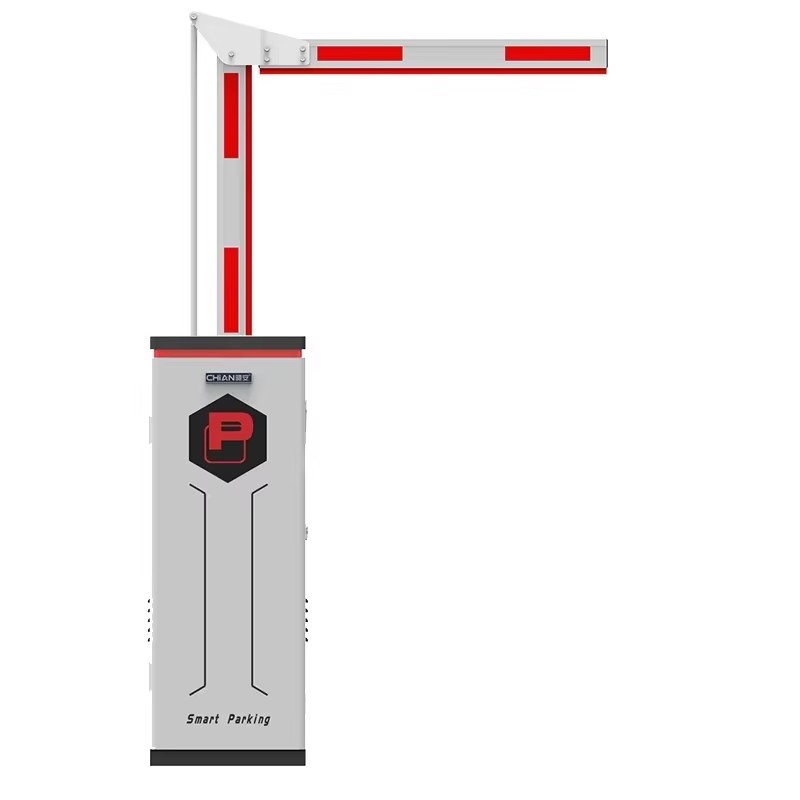
Folding Arm Barrier Gate: A Practical Solution for Low-Ceiling Parking Entrances
Folding Arm Barrier Gate: A Practical Solution for Low-Ceiling Parking Entrances
Automatic boom barriers are widely used to control vehicle access at parking lots, residential communities, office buildings, and commercial properties. However, a conventional straight boom arm may not be suitable for every entrance.
Underground parking garages and other covered entrances often have limited overhead clearance. A long straight boom may require too much vertical space when opening. In these situations, a folding arm barrier gate provides a practical alternative.
Instead of raising the entire boom as one straight arm, the folding mechanism allows part of the boom to fold during opening. This reduces the vertical clearance required and makes the barrier suitable for entrances where installation height is limited.
What Is a Folding Arm Barrier Gate?
A folding arm barrier gate is an automatic vehicle access barrier equipped with a jointed boom arm. It performs the same basic access-control function as a conventional boom barrier, but the arm folds at a designed angle while the barrier opens.
A common configuration is the 90-degree folding boom barrier. As the main boom rises, the second section folds, allowing the barrier to operate within a lower vertical space.
When the barrier closes, the sections extend into a horizontal position to block the vehicle lane.
This design is particularly useful when a standard straight boom cannot fully open because of ceilings, pipes, ventilation systems, lighting equipment, or other overhead structures.
Why Use a Folding Barrier Gate in Underground Parking?
Low clearance is one of the main challenges when installing an automatic barrier gate inside an underground parking garage.
A conventional straight boom requires sufficient vertical clearance based on the length and opening angle of the arm. For a relatively long vehicle lane, the required height can exceed the available ceiling space.
A folding parking barrier gate helps solve this problem by changing the movement of the boom arm.
This makes it suitable for locations such as underground parking garages, covered parking areas, commercial buildings, residential communities, hotels, office buildings, and vehicle entrances with overhead obstacles.
Before installation, the available lane width, ceiling height, boom length, cabinet position, and folding direction should all be measured carefully.
How Does a 90-Degree Folding Boom Barrier Work?
The folding boom consists of multiple connected sections rather than one rigid straight arm.
During opening, the barrier motor drives the main arm upward. At the same time, the connected section changes its angle through the folding mechanism. This allows the complete boom assembly to remain within a smaller vertical operating area.
During closing, the process is reversed until the boom returns to its horizontal position.
The folding mechanism therefore does not change the fundamental purpose of the barrier. Its main advantage is adapting automatic vehicle access control to locations where vertical installation space is restricted.
Folding Arm Barrier Gate vs. Straight Boom Barrier Gate
Both types are designed to control vehicle entrances, but their installation requirements are different.
A straight boom barrier gate is generally a simple choice for outdoor parking lots and entrances with sufficient overhead clearance. The straight arm provides a straightforward structure and is available for different lane widths.
A folding arm barrier gate, on the other hand, is designed for entrances where height is limited. Its jointed boom reduces the vertical space required during opening.
Therefore, the choice should not simply depend on which barrier is more powerful or more advanced. It should depend on the physical conditions of the entrance.
For an outdoor entrance without overhead restrictions, a straight boom may be sufficient. For an underground garage or covered entrance with a low ceiling, a folding boom can be the more practical configuration.
What Should You Consider Before Choosing a Folding Barrier Gate?
Selecting the correct barrier requires more than checking the boom length. Several installation and access-control requirements should be considered.
Available ceiling height is especially important. Measure the lowest overhead obstacle rather than only the nominal building height.
Lane width determines the required boom length. The selected folding arm should cover the vehicle lane properly without interfering with surrounding structures.
Opening and closing speed should match the expected traffic flow. Busy entrances may require faster operation, while other locations may prioritize controlled movement and stability.
Vehicle detection and safety devices are also important. Depending on the parking system design, the barrier can work with devices such as ground loop detectors and other safety sensors to help manage the boom around passing vehicles.
Finally, consider how the barrier will communicate with the overall access-control system.
Can a Folding Barrier Gate Work with ANPR and RFID?
Yes. A folding boom describes the mechanical configuration of the barrier arm, while ANPR, RFID, and other technologies determine how vehicle access is authorized.
A folding barrier gate can therefore be integrated into a broader parking access control system.
For example, an ANPR/LPR camera can capture and recognize an approaching vehicle's license plate. After the parking or access-control system verifies the vehicle, an opening signal can be sent to the automatic barrier.
RFID readers, access cards, remote controls, push buttons, and other authorized control devices can also be used depending on the project requirements.
This makes folding barriers suitable not only for basic vehicle entrances but also for automated parking access control projects.
Typical Applications of Folding Boom Barriers
Folding arm barriers are especially useful in projects where vehicles need controlled entry but the installation environment restricts the movement of a conventional straight boom.
Typical applications include underground parking garages, apartment parking entrances, office building garages, shopping mall parking areas, hotels, hospitals, commercial properties, and other covered vehicle entrances.
They can also be considered when pipes, ventilation ducts, structural beams, lighting fixtures, or other equipment are installed above the vehicle lane.
How to Choose the Right Folding Arm Barrier Gate
Before ordering a folding barrier, provide the supplier with accurate information about the installation site.
Important information includes the lane width, available ceiling height, required boom length, installation position, traffic volume, power supply, and required access-control method.
If the barrier will be integrated with an ANPR camera, RFID reader, parking controller, or ground loop detector, these requirements should also be confirmed before installation.
Providing these details helps determine the appropriate boom configuration and reduces the risk of installation problems after the equipment arrives.
Conclusion
A folding arm barrier gate is designed to solve a specific vehicle access problem: installing an automatic boom barrier where vertical clearance is limited.
Its folding boom structure makes it particularly suitable for underground garages and covered parking entrances where a conventional straight boom cannot open freely.
For parking projects, the correct solution should be selected according to lane width, ceiling height, traffic requirements, safety devices, and access-control integration rather than boom length alone.
When properly configured, a folding boom barrier can provide reliable vehicle entrance control while making efficient use of restricted installation space.
Table of Contents
- Folding Arm Barrier Gate: A Practical Solution for Low-Ceiling Parking Entrances
- Folding Arm Barrier Gate: A Practical Solution for Low-Ceiling Parking Entrances
- What Is a Folding Arm Barrier Gate?
- Why Use a Folding Barrier Gate in Underground Parking?
- How Does a 90-Degree Folding Boom Barrier Work?
- Folding Arm Barrier Gate vs. Straight Boom Barrier Gate
- What Should You Consider Before Choosing a Folding Barrier Gate?
- Can a Folding Barrier Gate Work with ANPR and RFID?
- Typical Applications of Folding Boom Barriers
- How to Choose the Right Folding Arm Barrier Gate
- Conclusion